
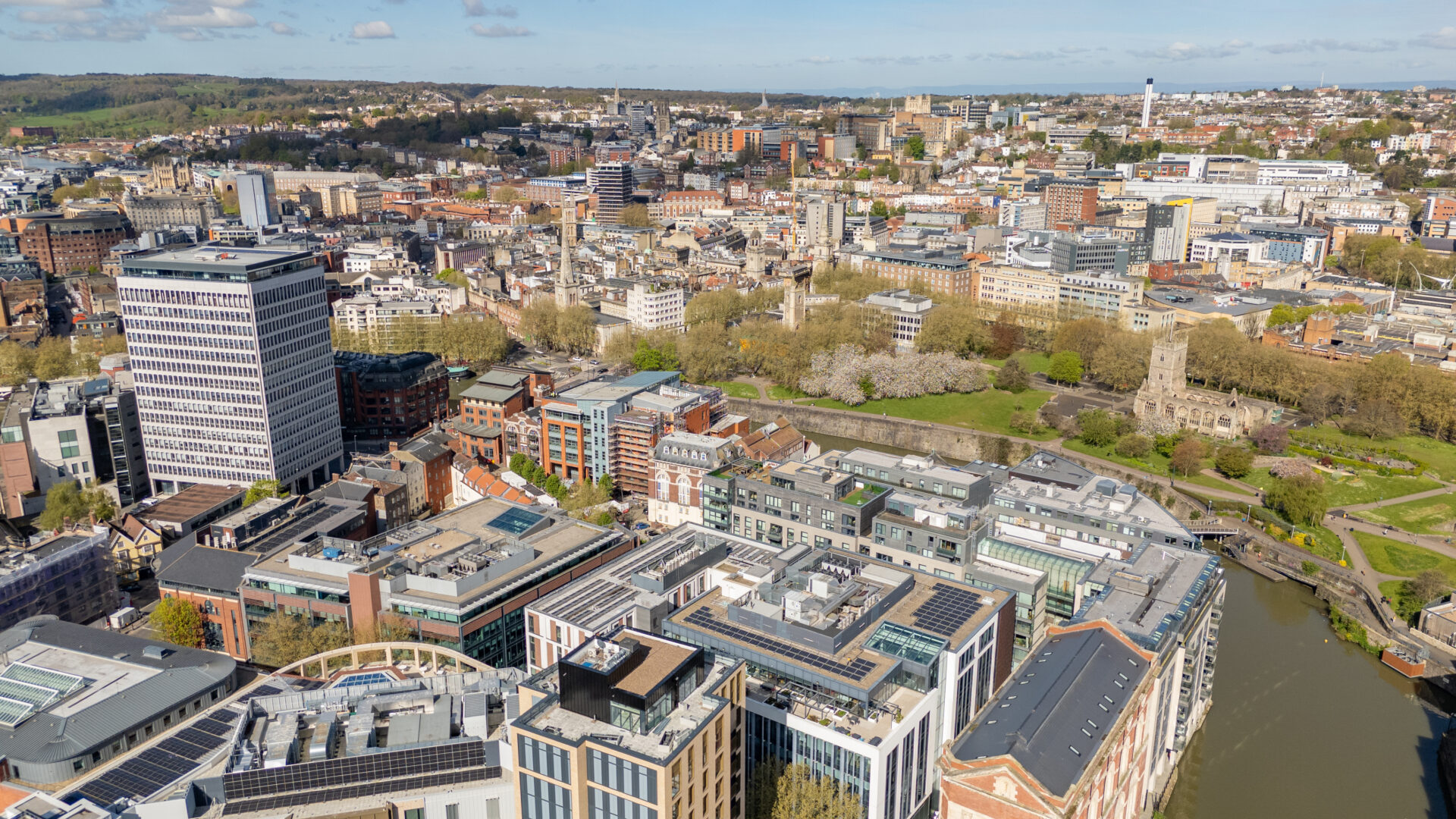
After years of false starts and underground tunnel dreams that never materialised, Bristol’s mass transit system is finally moving forward. The West of England Combined Authority has confirmed that planning is underway for a surface-based rapid transit network, with delivery expected in the late 2020s to early 2030s. For landlords and property investors, this isn’t just another infrastructure announcement—it’s a roadmap to predictable, substantial returns.
History tells us exactly what happens when new transit routes arrive. When the MetroBus rolled into South Bristol, properties within 500 metres of the M1 route saw average value increases of 12-18% within three years. Now, with a far more ambitious mass transit network on the horizon, we’re looking at similar—or greater—uplifts across postcodes that have historically been undervalued due to connectivity challenges.
The question isn’t whether Bristol mass transit property values will rise. It’s about which postcodes will see the biggest jumps and whether you’ll position yourself before the market catches on.
Explore investment opportunities in Bristol today – discover available properties now.
Why infrastructure drives property values
Transport connectivity is the single most reliable predictor of residential property value growth in UK cities. It’s not speculation—it’s pattern recognition backed by decades of data.
Look at what happened along the Elizabeth Line in London, where properties near new stations in previously overlooked areas like Abbey Wood and Woolwich saw 25-40% increases even before the line opened. Closer to home, the MetroBus m3 route connecting Emersons Green to the city centre brought renewed investor interest to Staple Hill and Fishponds, with rental yields tightening and capital values climbing steadily.
Bristol’s planned mass transit network promises to be transformative. Unlike the abandoned underground scheme, the surface rapid transit system will be deliverable, affordable, and extensive—connecting outer neighbourhoods to the city centre, Temple Meads, and the expanding employment hubs at Filton and the Bristol and Bath Science Park.
For landlords, this represents a rare opportunity to buy into areas that will fundamentally change character over the next decade. The time to act is now, while current prices still reflect yesterday’s connectivity rather than tomorrow’s potential.
The MetroBus precedent
When the MetroBus M1 route opened in 2018, connecting Long Ashton to the city centre via Ashton Gate and Spike Island, average property prices along the corridor rose 15% faster than the Bristol average over the following three years. Bedminster, already popular, became a premium location. Ashton, previously car-dependent, suddenly offered sub-20-minute commutes to Temple Meads.
The upcoming mass transit network will deliver this same transformation to postcodes that have waited decades for proper rapid transit connections.
The five postcodes poised for growth
Based on the proposed route maps, current property values, and comparable transit projects across the UK, these are the Bristol postcodes where landlords should be focusing their attention.
BS4: Knowle West and Hengrove Park
Current average property price: £245,000
Projected uplift by 2032: 18-22%
Knowle West has long been Bristol’s most undervalued neighbourhood relative to its proximity to the city centre. Just three miles from Temple Meads, it’s closer than many BS7 postcodes that command £100,000+ premiums. The barrier? Connectivity.
The planned mass transit route through Hengrove Park and Knowle West will change everything. Suddenly, this community—with its new Hengrove Park development bringing hundreds of homes, a lake, and community facilities—will offer city centre access in under 15 minutes.
For landlords, BS4 offers the strongest risk-reward ratio in Bristol. Entry prices remain accessible, rental demand is solid from working families and young professionals priced out of Southville and Bedminster, and the infrastructure tailwind is undeniable. Properties near the proposed Hengrove Park transit hub should be priority targets.
BS5: Eastville and St George
Current average property price: £285,000
Projected uplift by 2030: 15-20%
BS5 has been quietly gentrifying for years, with the Eastville and St George areas attracting first-time buyers and young families drawn to Victorian terraces, green spaces like Eastville Park, and improving local amenities. The missing piece has been rapid transit into the city centre and out to the M32 corridor employment zones.
The proposed mass transit network includes routes connecting BS5 directly to Cabot Circus, Temple Meads, and potentially the Brabazon employment hub in Filton. This transforms St George from a neighbourhood where you need a car into one where you don’t—a shift that always drives value growth.
Landlords should focus on properties within a 10-minute walk of proposed transit stops along the Whitehall Road and Church Road corridors. These will command rental premiums from tenants prioritising commute times, and capital values will follow.
BS7: Horfield and Lockleaze (outer areas)
Current average property price: £320,000 (Horfield) / £255,000 (Lockleaze)
Projected uplift by 2031: 16-20%
Inner BS7—Bishopston, Gloucester Road—is already expensive. But outer BS7, particularly Horfield beyond the Ring Road and Lockleaze, remains relatively affordable despite excellent fundamentals: good housing stock, green spaces, schools, and community facilities.
The planned mass transit routes connecting these areas to Southmead Hospital, UWE Frenchay Campus, and the city centre will unlock latent value. Lockleaze, in particular, represents exceptional value. It’s undergone significant regeneration, has strong community cohesion, and sits adjacent to the M32 but has lacked the transit links to translate location into premium pricing.
When rapid transit arrives, expect Lockleaze to follow the Easton trajectory: from overlooked to in-demand within a single property cycle. For landlords willing to look beyond the obvious, this is where serious returns await.
BS16: Downend and Emersons Green
Current average property price: £310,000
Projected uplift by 2030: 15-18%
BS16 already benefits from MetroBus m3 service, but the proposed mass transit expansion will bring higher frequency, greater capacity, and better integration with the wider network. This matters because Emerson’s Green and Downend are major employment and retail hubs—the Bristol and Bath Science Park alone is adding thousands of jobs.
Properties in BS16 offer landlords a different proposition: established areas with proven rental demand, where infrastructure improvements will drive incremental but reliable value growth. These aren’t speculative plays—they’re safe, steady investments that will benefit from Bristol’s overall growth trajectory and enhanced connectivity.
Target properties near proposed transit interchanges, where tenants can access both the mass transit network and existing MetroBus routes for maximum flexibility.
BS34: Filton and Patchway
Current average property price: £270,000
Projected uplift by 2030: 17-21%
Filton is Bristol’s jobs engine. Airbus, Rolls-Royce, the MOD, and the emerging Brabazon neighbourhood are creating thousands of high-skilled, high-wage positions. Yet housing in BS34 remains surprisingly affordable compared to central Bristol.
The mass transit network will connect Filton directly to Temple Meads, the city centre, and UWE, making it viable for workers across Bristol’s knowledge economy. As Brabazon develops—bringing 2,600 new homes, offices, and amenities onto the former airfield—BS34 will transform from an industrial suburb to a thriving urban neighbourhood.
For landlords, this represents a decade-long growth story. Buy now while prices reflect current perceptions, hold as infrastructure delivers and Brabazon matures, and benefit from both capital growth and strong rental yields from professional tenants working locally.
How to position yourself before the market moves
Infrastructure-driven property investment requires timing. Buy too early, and your capital sits idle. Buy too late, and the growth has already been priced in. Right now, Bristol sits in the sweet spot.
The mass transit routes are confirmed in planning, but construction hasn’t started. Most buyers are still making decisions based on today’s connectivity, not 2030’s. That gap—between what’s coming and what’s priced in—is where landlords make returns.
Focus on proximity to proposed stops
Properties within a 10-minute walk (roughly 800 metres) of proposed transit stops will see the strongest value uplifts. Use the published route maps to identify these zones, then look for properties that are currently undervalued relative to the neighbourhood average—terraced houses on quieter streets, flats in well-maintained blocks, and properties needing minor cosmetic updates.
Prioritise rental fundamentals
Infrastructure growth is predictable, but it’s not instant. You need properties that generate strong rental returns today while you wait for capital appreciation tomorrow. Look for two or three-bedroom homes near schools, parks, and local amenities—the kind of properties that attract stable, long-term tenants.
This is where Northwood’s Guaranteed Rent model becomes powerful. You can invest in these growth postcodes knowing you’ll receive rent every single month, whether the property is occupied or not, whether the tenant pays or not. No cash flow gaps. No sleepless nights. Just steady income while infrastructure does its work and values climb.
Act before route announcements firm up
Once final route alignments and stop locations are confirmed—likely within the next 18-24 months—the market will react immediately. Properties near confirmed stops will see prices jump as investors and owner-occupiers compete for position.
The opportunity is now, while there’s still some uncertainty in the exact details. Buy in the corridors where routes are planned; focus on areas with strong fundamentals regardless of transit, and you’ll benefit whether the stop lands 200 metres north or south of your property.
The risks are worth acknowledging
We’re not here to overhype. Infrastructure projects can face delays—Bristol knows this better than most. The underground metro was abandoned. MetroBus arrived years late. There are no guarantees the mass transit network will open exactly on schedule.
But here’s what matters: the direction of travel is clear. Bristol is growing, employment is concentrating in hubs that need connecting, and the city cannot function without better public transport. Whether the network opens in 2029 or 2032, it’s coming.
And even if timelines slip, the postcodes we’ve identified offer strong fundamentals independent of transit. They’re not speculative punts on a single infrastructure project—they’re solid investments in growing neighbourhoods that will become exceptional investments when connectivity improves.
That’s responsible property investment. Not gambling on a single outcome, but positioning yourself where multiple scenarios lead to growth.
Want to maximise your property’s value? Book a free valuation with our local experts today.
Your move
Bristol’s mass transit network represents the most significant infrastructure development in the city’s modern history. The postcodes along planned routes—BS4, BS5, outer BS7, BS16, and BS34—offer landlords a clear pathway to 15-20% value growth over the next decade, backed by comparable data from transit projects across the UK.
The window to act is open, but it won’t stay open forever. As route details firm up and construction begins, prices will adjust. The landlords who benefit most will be those who moved early, bought smart, and held with confidence.
At Northwood Bristol, we’re not middle managers shuffling papers—we’re local owners who know these neighbourhoods, track these developments, and invest in this city ourselves. We understand the Bristol mass transit property value opportunity because we’re positioned to benefit from it too.
Whether you’re a first-time landlord testing the waters or a portfolio investor looking for your next growth play, we’ll help you find the right property in the right postcode, structure the investment to maximise returns, and protect your income with Guaranteed Rent while the market moves in your favour.
Guaranteed Rent. Guaranteed Freedom. Your investment property sorted, your income protected, your future secured.
Get in touch with Northwood Bristol today. Let’s talk about which BS postcode makes sense for your goals, your timeline, and your ambitions. The mass transit map is drawn. Now it’s time to make your move.