
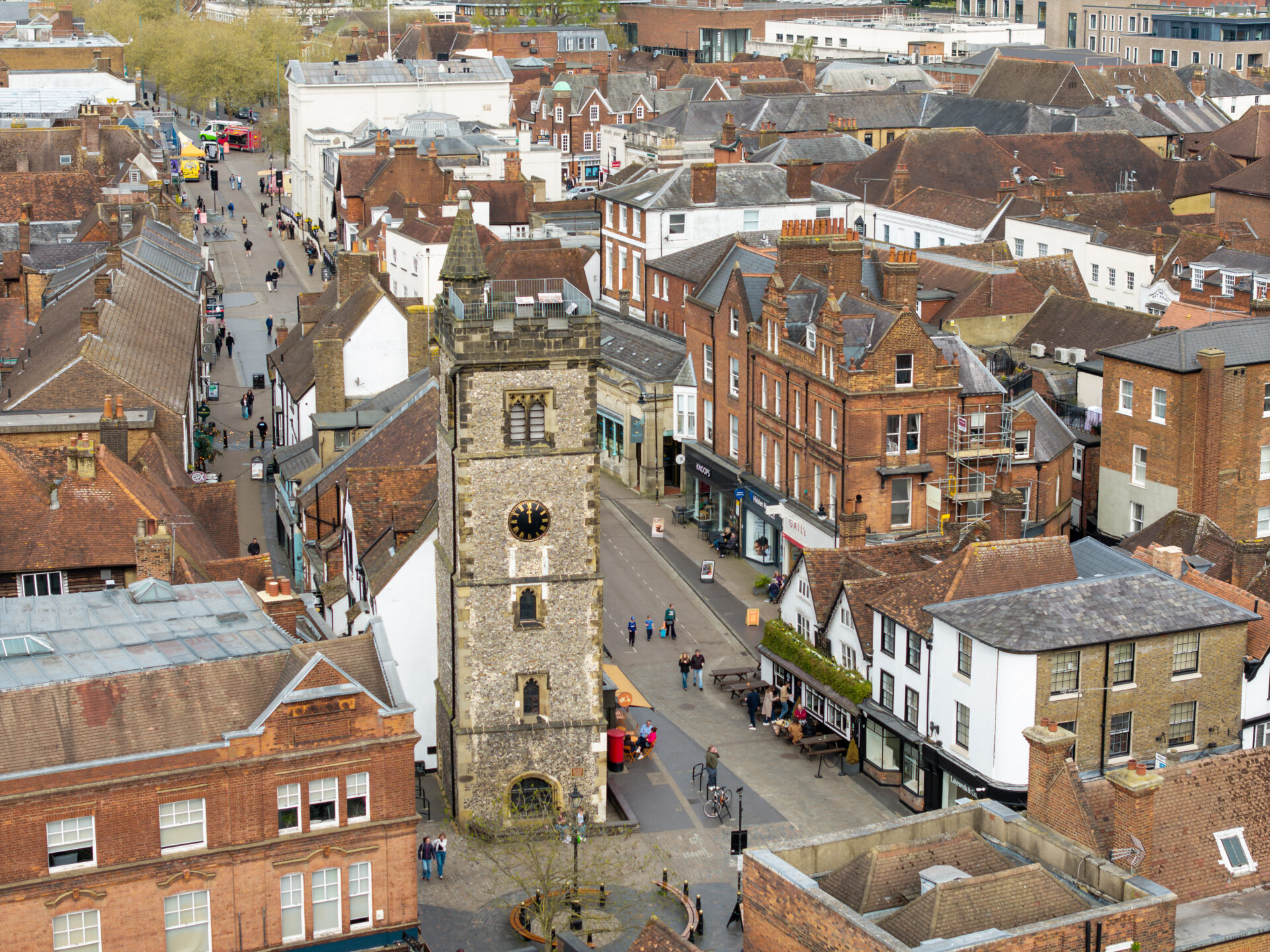
St Albans has long been one of Hertfordshire’s most coveted postcodes. Strong schools, fast trains into London, and streets lined with everything from Roman heritage to independent coffee shops have kept demand consistently high. But 2026 is shaping up to be a year where something bigger than school catchments and commuter convenience is driving the conversation: the St Albans City and District Local Plan 2041.
For sellers, buyers, and investors paying attention, this plan is not background noise. It is a live document that could meaningfully shift where values go next – and which streets feel the pressure first.
What is the St Albans Local Plan 2041?
The Draft Local Plan 2041 sets out how St Albans City and District Council intends to manage housing growth, infrastructure, and land use over the next two decades. It identifies sites for thousands of new homes across the district, with significant allocations proposed in and around settlements that have historically sat just outside the main property spotlight.
The plan has already attracted considerable debate, particularly around green belt release. Several proposed development sites sit on land that has been protected for decades, and the question of whether that protection holds — or bends under government housing targets — is one that every homeowner in the district should be watching.
The neighbourhoods most likely to feel the shift
Not every part of St Albans will be affected equally. Understanding the local geography of this plan is where practical, evidence-based advice really matters.
Redbourn
Redbourn sits to the north-west of the city and has been earmarked as one of the more significant growth areas in the draft plan. Proposals for new residential development on the village’s edges have sparked strong local opposition, and that tension itself is worth noting.
Where planning uncertainty exists, buyer sentiment can soften temporarily. However, if infrastructure investment follows – improved road links and enhanced local amenities – values in Redbourn could recover and then some. The village’s existing character and strong community identity remain powerful draws.
London Colney
London Colney, sitting just south of the city near the M25, is another area flagged for growth. Its proximity to the motorway network makes it attractive to buyers who need flexibility beyond the St Albans rail corridor.
Proposed development pressure here could increase housing supply in the short term, which typically moderates price growth. Longer term, improved local facilities and transport connectivity could strengthen its position as a genuine alternative to pricier AL1 addresses.
Park Street and Chiswell Green
These two villages, tucked between St Albans and Bricket Wood, occupy an interesting middle ground. They benefit from proximity to the city without the AL1 price premium, and both have been identified in planning discussions as areas where modest growth is anticipated.
For sellers here, the message is nuanced. New supply nearby can create short-term competition, but the established residential feel of both villages continues to attract buyers seeking value within easy reach of the city centre and the M25.
Marshalswick
Marshalswick is a well-established residential suburb to the north-east of the city centre. It sits closer to the urban core than the villages above, and its position means it is less directly exposed to the large-scale greenfield allocations proposed elsewhere in the plan.
Demand here tends to be steady and family-driven. Its proximity to good schools and the city’s amenities gives it a resilience that more peripheral locations may not share if supply increases significantly elsewhere.
What about prime AL1 and AL3?
The streets closest to the city centre — particularly those in AL1 around the historic core and AL3 near Verulamium Park and Clarence Park — occupy a different tier of the market entirely.
These areas are not significantly exposed to the large-scale development allocations in the draft plan. Their appeal is rooted in scarcity, heritage, and lifestyle. Buyers competing for a Victorian terrace on Sandpit Lane or a period family home near the park are not primarily influenced by what happens in Redbourn.
That said, if the overall district sees a meaningful increase in housing supply, the relative premium commanded by prime central addresses may become even more pronounced. Scarcity has a way of asserting itself.
What does this mean if you are thinking of selling in 2026?
The honest answer is that timing and location matter more than ever right now. Sellers in areas close to proposed development sites should not panic, but they should be informed. Understanding how a planning allocation near your home might influence buyer perception — and how to position your property accordingly — is the difference between a smooth sale and a prolonged one.
This is not the moment for a generic online valuation from someone who has never walked your street. It is the moment for a conversation with people who know this patch intimately and can give you a straight answer.
At Northwood St Albans, we work with sellers across the district every day. We understand the nuance between a Marshalswick semi and a London Colney new build, and we can tell you clearly what your home is worth in today’s market – and what the local plan debate means for your timing.
Investors and landlords: where is the opportunity?
For landlords and investors, the Local Plan presents a different kind of question. Areas earmarked for growth often see increased rental demand during the construction and transition phase, as workers, families in temporary accommodation, and new residents arrive before buying.
If you are a portfolio landlord or a first-time investor considering St Albans, Northwood’s Investors Club can connect you with the right stock at the right time – properties positioned to perform from day one, not after years of waiting.
Get an evidence-based valuation from people who know St Albans
The Local Plan 2041 is a live and evolving document. Values in different parts of the district will respond differently as they progress through examination and adoption. What you need is not a guess — it is a grounded, local assessment from an agent with real roots in this market.
Book a valuation with Northwood St Albans today and speak directly with our team — not a remote call centre, but local people who know every postcode, every proposed allocation, and every opportunity this market holds.
Your next move deserves better than guesswork. Let us give you the clarity to make it with confidence.